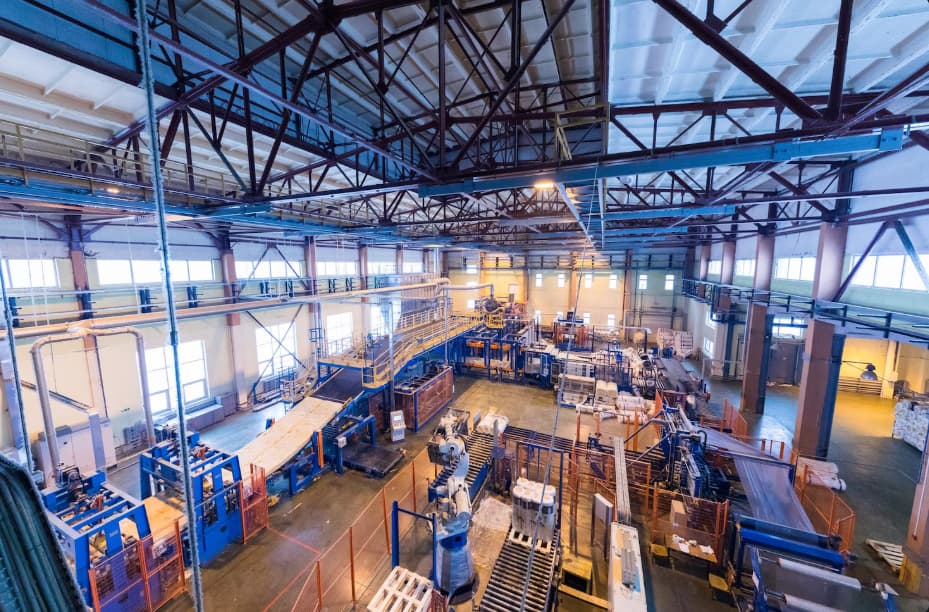

In the fast-paced era of Industry 4.0, the manufacturing sector faces increasingly complex challenges. From fluctuating raw material prices and dynamic market demands to stringent operational efficiency requirements. Many traditional manufacturing companies are still trapped in fragmented data management, where production, warehouse, and finance departments operate in 'silos' or separate systems. This condition often leads to miscommunication, excessive stock, and delays in product delivery to consumers.
This is where Enterprise Resource Planning (ERP) plays a crucial role. ERP is not just basic accounting software; it is the digital backbone that integrates all aspects of business operations into a single unified platform. With the right ERP system, manufacturing companies can transform raw data into strategic insights that drive growth. This article will delve into why investing in an ERP system is a smart move for the future sustainability of your manufacturing business.
1. Real-Time Inventory and Supply Chain Visibility
One of the biggest challenges in manufacturing is maintaining the balance between raw material availability and storage costs. Without an integrated system, production managers often only realize a stock shortage when the production line has already stopped, or conversely, the company holds too much stock (overstocking), which freezes cash flow. According to industry statistics, companies that implement ERP are typically able to reduce inventory costs by 10% to 20% through more accurate stock management.
With an inventory management module within an ERP, you gain real-time visibility into the movement of goods. This system enables features like 'Just-In-Time' (JIT) manufacturing, ensuring raw materials are ordered exactly when needed. Furthermore, integration with the supply chain allows you to track order status from suppliers automatically. This minimizes the risk of the 'Bullwhip Effect'—a phenomenon where small fluctuations in customer demand cause significant instabilities in the supply chain.
2. Streamlining Production Processes and Reducing Downtime
The efficiency of the production floor is the heart of manufacturing profitability. ERP systems allow for more precise production planning by considering machine capacity, labor availability, and delivery schedules. Through an integrated Manufacturing Execution System (MES) module, operators can monitor every stage of production in detail. A practical insight gained is the ability to detect 'bottlenecks' before they become major problems.
Furthermore, the integration between ERP software and industrial automation systems (such as IoT sensors on machines) enables the implementation of preventive maintenance. Instead of repairing a machine after it breaks down (which causes expensive downtime), the ERP can provide service schedule alerts based on machine operating hours. According to a report by the Aberdeen Group, world-class manufacturing companies using integrated ERP achieve OEE (Overall Equipment Effectiveness) levels of up to 89%, far above the industry average which only ranges from 60-70%.
3. Accurate Cost of Goods Sold (COGS) Calculation and Cost Control
Manufacturers often struggle to set competitive selling prices because they lack accurate data regarding the Cost of Goods Sold (COGS). In manual systems, indirect labor costs, electricity costs, and machine depreciation are often overlooked in calculations. ERP solves this problem by automating the collection of cost data from various departments accurately and transparently.
With accurate data, the management team can perform deep profit margin analysis for each product unit. You can know for sure which products yield the highest profit and which ones are actually causing losses due to inefficiency. Statistics show that companies switching to ERP can increase their financial reporting accuracy by up to 95%, reducing human errors in data entry that often lead to significant financial losses.
4. Quality Standardization and Regulatory Compliance
In industries such as pharmaceuticals, food and beverage, or automotive components, compliance with quality standards (like ISO) and government regulations is non-negotiable. ERP provides traceability features that allow you to track a product's history from the raw material source to the final customer. If a quality issue occurs in one batch, you can quickly identify the source of the problem and conduct a limited and efficient product recall.
ERP systems also help document every Standard Operating Procedure (SOP) digitally. This ensures that every employee on the production line follows the same steps, maintaining consistent product quality. With an integrated Quality Control module, every quality check is recorded automatically, facilitating audit processes and ensuring that your company always meets applicable industrial compliance standards without the hassle of piles of physical documents.
Conclusion
Implementing an ERP system is no longer a luxury but a necessity for manufacturing companies that want to remain competitive in the global market. From increased inventory visibility to tighter cost control, the benefits offered by ERP directly impact the company's bottom-line profitability. While the initial implementation requires investment, the long-term Return on Investment (ROI) in the form of efficiency, waste reduction, and customer satisfaction far outweighs the costs.
Is your manufacturing business still facing challenges with data synchronization or production line inefficiencies? PT Wahari Nawa Manunggal is here with Digital Software Solutions and ERP Customization that have been trusted by various industries to transform towards maximum efficiency. Don't let your operations fall behind; consult your technology needs now at https://waharinawa.com